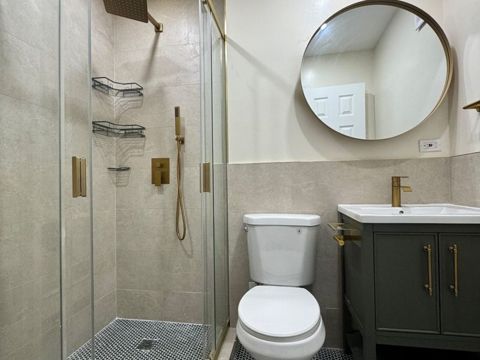
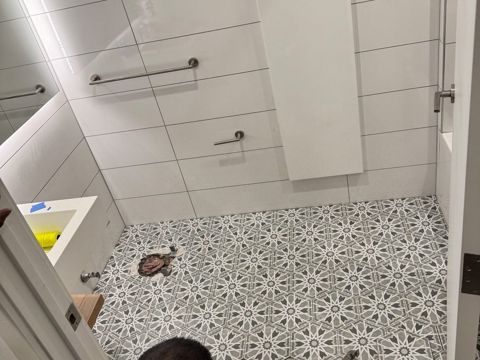
What tile actually costs per square foot in New York City, from a Brooklyn contractor who prices these jobs every week — bathroom floors, showers, backsplashes and commercial installs, plus the conditions that move the number.
Most pages that answer this question are written by people who have never set a tile. They give you a national average, which is useless in a fifth-floor walk-up in Park Slope. These are the ranges we actually quote in New York City.
| Work | Installed price | What that covers |
|---|---|---|
| Bathroom floor & wall tile | $15–$35 / sq ft | Layout, setting materials, waterproofing where it is needed, tile setting, grout and clean-up. |
| Commercial tile installation | $18–$45 / sq ft | Heavier commercial-rated tile, tighter flatness tolerances, protection of adjacent areas, and night or weekend scheduling. |
| Regrouting (existing tile) | $8–$15 / sq ft | Cutting out the old grout, cleaning the joints, new grout, sealing. No demolition. |
| Grout cleaning & sealing | $3–$6 / sq ft | Deep clean, color restoration where the grout is sound, penetrating sealer. |
The tile itself is not in those numbers. Tile price varies more than anything else on the job — a basic porcelain and a book-matched marble slab are not in the same universe. We can supply at trade pricing or set tile you have already bought, and we will tell you exactly how much to order including waste for your pattern.
Square-foot pricing only becomes useful when you put it against a real room. These are the three we are asked about most.
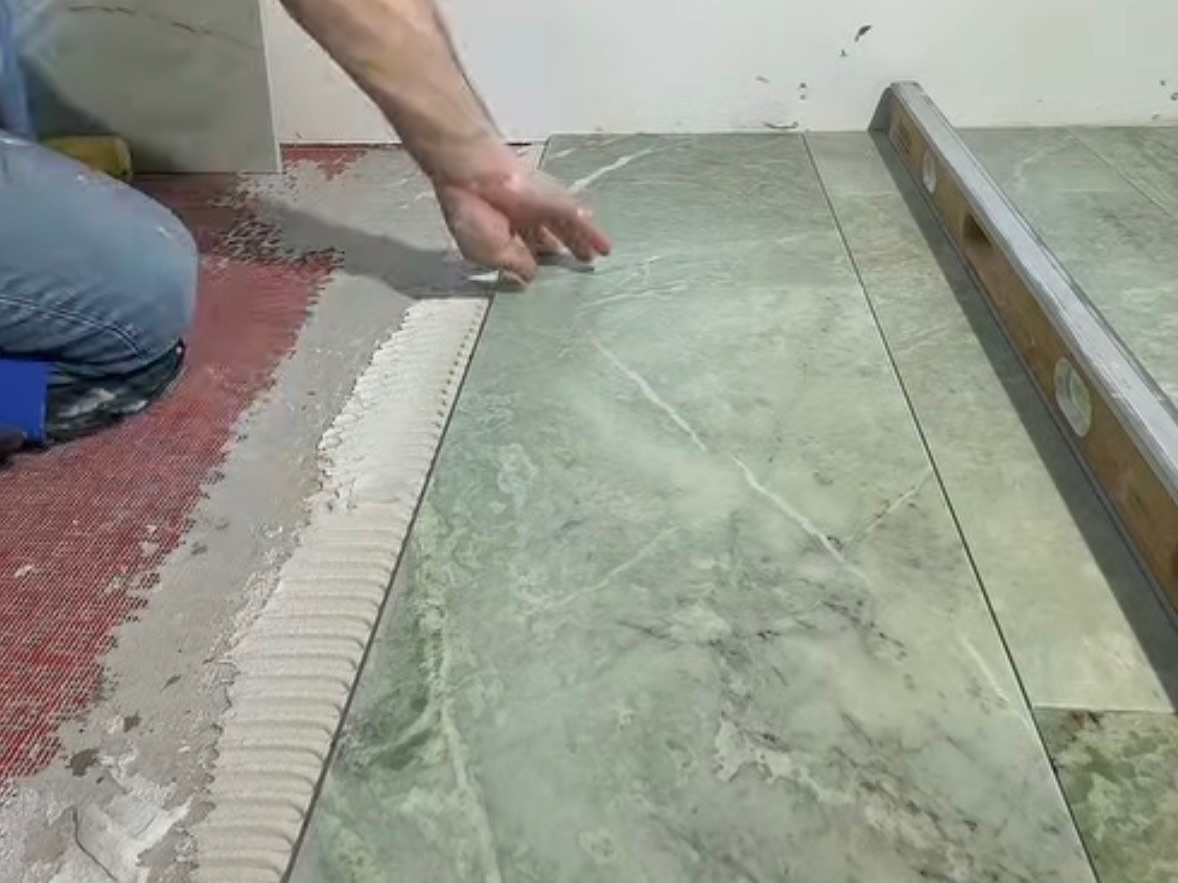
The floor only. This is the classic Brooklyn apartment bathroom. The bottom of the range is a straightforward 12×24 porcelain on a sound, level floor. The top is a mosaic or a pattern, or a floor that needs leveling first.
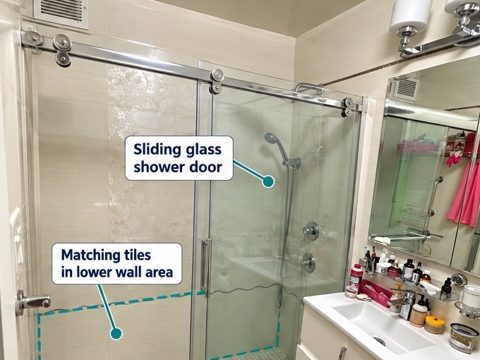
Because the wall area is usually three to four times the floor area, and a shower has to be waterproofed properly before a tile goes on it. This is the job where a square-foot figure misleads people most, and where we insist on seeing the room before quoting.
Commercial rates carry the overnight scheduling, the protection of everything you are not tiling, and tile rated for the traffic. You close after service and open in the morning on the new floor.
If two tile quotes are far apart, it is almost always one of these — not one contractor being greedy and the other being generous.
Pre-war New York floors are rarely flat. Leveling compound, plywood repair or a proper uncoupling membrane are all real materials and real hours, and skipping them is why tile cracks a year later. A quote that ignores the substrate is not cheaper — it is incomplete.
A shower has to be waterproofed before it is tiled — membrane, sealed corners, sealed penetrations. It is invisible when the job is done, which is exactly why it is the first thing a cheap quote leaves out. We do not leave it out.
Access is a real cost in this city. Material goes up in the elevator or up the stairs; debris comes back down the same way. Co-ops and condos restrict work hours, require a certificate of insurance, and often require protection of the lobby and hallways. None of that applies to a suburban new-build, and all of it applies here.
Nights and weekends cost more than weekdays, and for a restaurant or a store they are usually worth it — a floor replaced overnight costs less than a week of being closed.
A good share of the people who call us about retiling a bathroom do not need one. If the tile is sound and it is the grout that has gone dark, cracked or crumbly, regrouting at $8–$15 per square foot gets you a bathroom that looks new for a fraction of a tear-out. If the grout is merely stained, cleaning and sealing at $3–$6 per square foot may be the whole job.
Retiling means demolition, disposal, substrate repair and fresh waterproofing before a single new tile is set. That is why it costs several times more — and why we will tell you when you do not need it. Send photographs and we will say honestly which one you are looking at.
Send photographs and rough measurements and we will come back with a fixed written price — the whole scope, not a per-square-foot guess. Free, and there is no obligation.